 Dutch platform
How do I apply AI in my business? It is by far the most frequently asked question right now.
Entrepreneurs and managers see daily reports about new AI tools and the revolutionary promises of artificial intelligence. But most businesses approach AI incorrectly. They start with a specific tool instead of examining their own workflow. Successful businesses start with a concrete problem.
Why AI is becoming increasingly important for businesses
At its core, applying AI is about efficiency. Repetitive, time-consuming processes often grow organically as your organisation expands. This demands extra staff and limits scalability. AI automation for small and medium-sized businesses is therefore increasingly popular for handling routine tasks accurately and extremely quickly.
AI automation for small and medium-sized businesses: where do you start?
Smaller organisations have a major advantage: their processes are often less complex and rigid than those of multinationals. This allows them to achieve directly measurable results within weeks. The most promising processes to automate are:
Customer service and email management
Order processing and shipping status
Administration and invoice entry
Marketing and product descriptions
Data analysis and trend forecasting
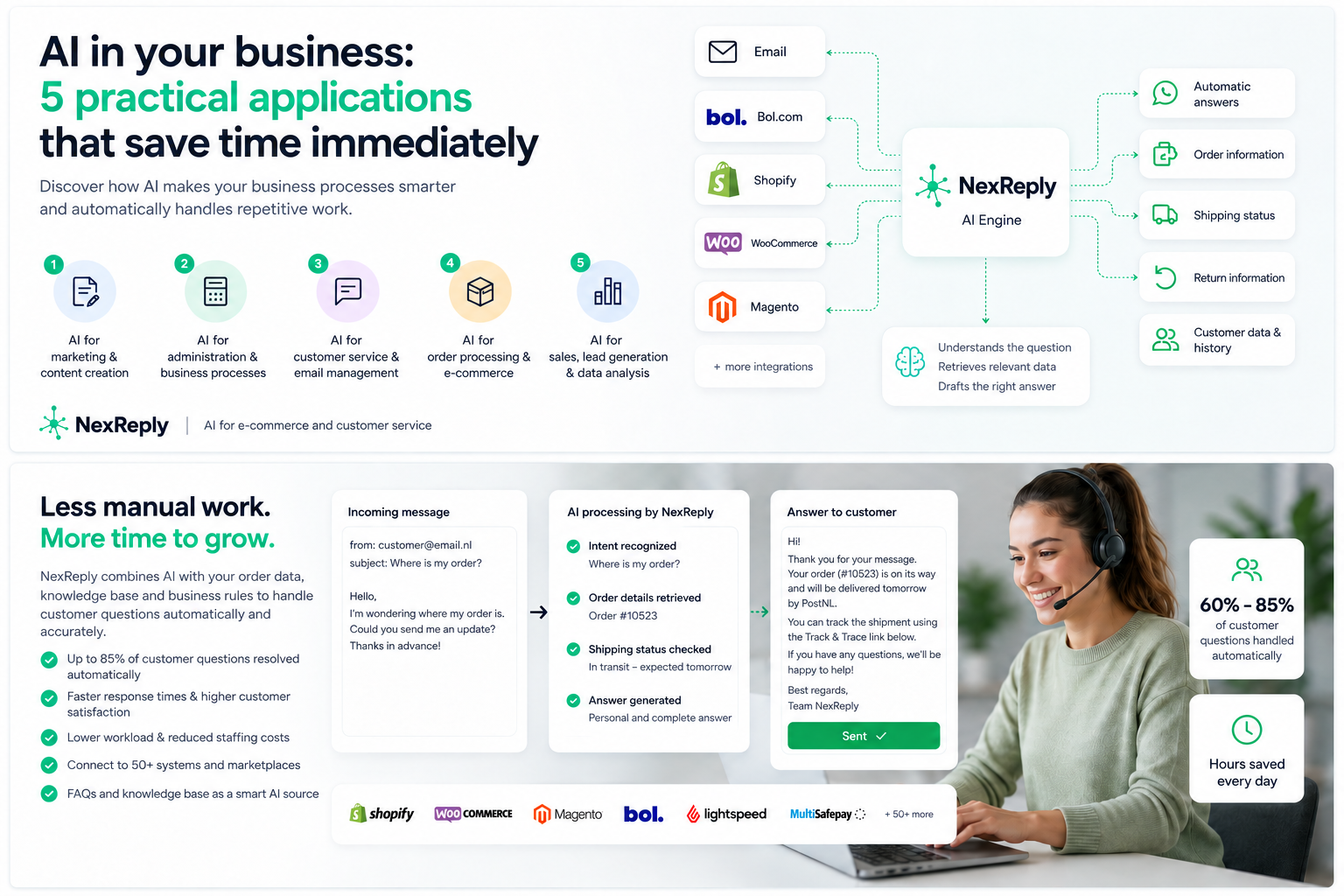
Figure 1: The 5 most efficient AI applications for e-commerce and small and medium-sized businesses.
1. AI for marketing and content creation
Large language model tools such as ChatGPT, Claude and Jasper are ideal for writing product descriptions, SEO improvements and newsletters. A common mistake, however, is allowing AI to publish completely independently without oversight. The best results come from using AI as an intelligent accelerator and thinking partner, with human quality control always in place.
2. AI for customer service and email management
This is by far the biggest opportunity for immediate gains in online shops. The vast majority of customer questions still arrive by email, not live chat. AI models can understand and prepare answers to questions about orders, shipping, returns and invoices very well. NexReply connects directly to systems such as Shopify, WooCommerce, bol.com and Lightspeed to retrieve live data. Unlike a traditional, rigid chatbot, an AI support platform understands contextually what the customer means and prepares a personalised reply.
💡 Chatbot vs platform: A chatbot forces users into a menu. An operational support platform reads the customer's email, checks the order status in your back office and composes an accurate reply your team can send with one click.
3. AI for administration and business processes
An often underestimated application is processing documents and invoices administratively. Where expensive, complex ERP implementations were once needed to structure data, AI can now read PDF documents directly, recognise metadata and accurately submit it to your accounting package or warehouse system through simple API integrations.
4. AI for order processing and e-commerce
The biggest operational gains are behind the scenes. Integrating AI into order processing lets you send proactive status updates, check tracking and automate returns flows. This is particularly crucial for bol.com sellers: strict service standards for delivery times and quick replies can be met easily by letting AI handle repetitive logistics questions.
5. AI for sales, lead generation and data analysis
By analysing patterns in historical customer data, AI can predict which leads are most promising and when they are likely to purchase again. You can also set up automated, personalised outreach campaigns aligned with individual prospects' behaviour, substantially increasing conversion rates.
Frequently asked questions about applying AI
How do I apply AI in my business?
Which AI tools do I need at a minimum?
Where is the best place to start?
What does AI automation for small and medium-sized businesses involve?
How does AI work specifically for customer service?
Can AI also take over my email management completely?
What can AI do for my order processing?
What benefits does AI offer bol.com sellers?
How does the FAQ function as an active knowledge source?
How do I build a reliable knowledge base for customer support?
Which AI solution is best suited to online shops?
Conclusion: The question is not whether, but how soon
The market is moving incredibly quickly. The question is no longer whether businesses will use AI, but which process they will digitalise and optimise first. NexReply is not a simple chat layer, but a deeply integrated operational support platform designed to save online shops and small and medium-sized businesses hours of work.
Why do online shops choose NexReply?
A complete operational platform: Not a standalone chatbot, but a centralised inbox that automates the daily email flow.
Direct API integrations: Seamless integration with 50+ e-commerce, ERP and fulfilment systems such as Active Ants, Monta and Picqer.
100% data security: GDPR compliant and hosted within the EU with strict ISO certifications.

